

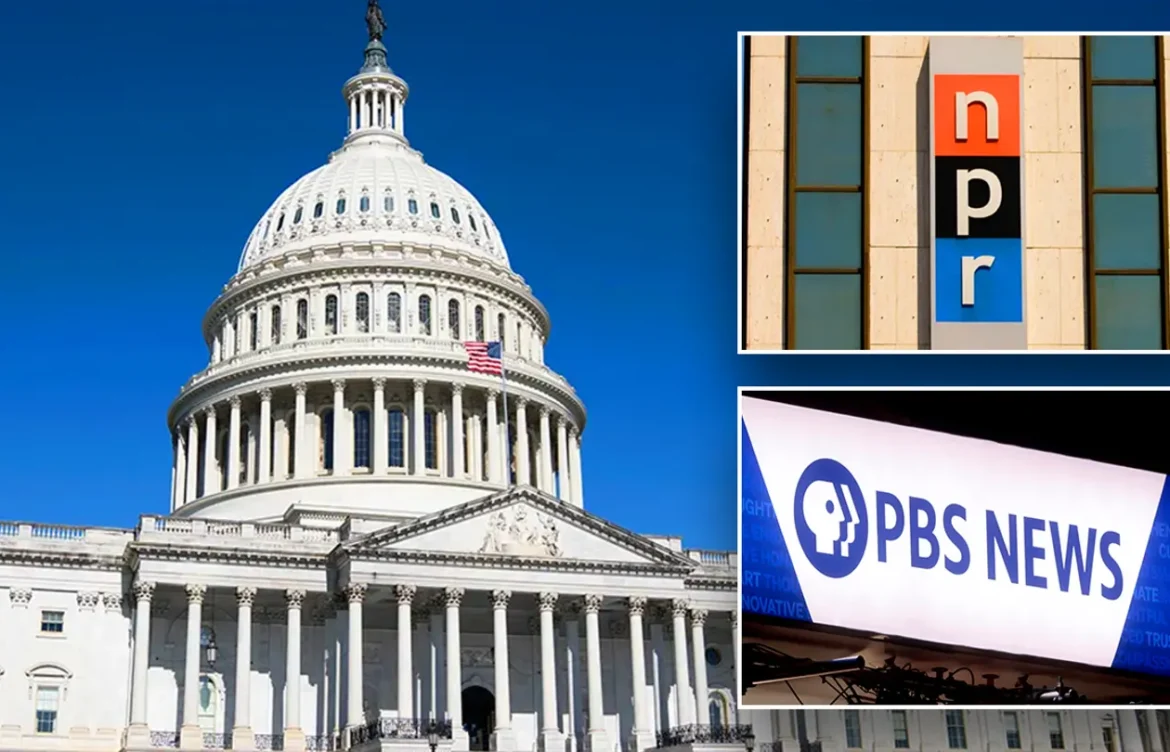
Corporation for Public Broadcasting Board Votes to Dissolve Organization After Congress Defunds NPR, PBS
In a historic and controversial move, the Corporation for Public Broadcasting (CPB) — the nonprofit agency that helped fund public media for nearly six decades — has voted to dissolve itself after Congress rescinded federal funding for NPR and PBS. The board made the decision following a dramatic defunding effort that eliminated its federal support, leaving the organization with no sustainable financial path forward. Fox News
End of an Era for Public Broadcasting
The CPB was established in 1967 under the Public Broadcasting Act to provide federal funding and support for public radio and television. Over the years, it helped distribute money to more than 1,500 local stations, including National Public Radio (NPR) and the Public Broadcasting Service (PBS), contributing to educational programming, cultural content, and local storytelling across the United States. Wikipedia
However, after Congress voted last summer to pull federal funding — a move driven by longstanding Republican criticism of perceived political bias in public media — the board concluded that the organization could no longer operate in a defunded state. FOX 29 Philadelphia
Leadership Reflects on the Decision
Patricia Harrison, president and CEO of CPB, said the board’s choice to dissolve was made to “protect the integrity of the public media system and democratic values,” rather than allowing the organization to remain a “defunded and vulnerable” shell. She emphasized CPB’s half-century role in ensuring broad access to trusted news, educational programming, and local storytelling. FOX 29 Philadelphia
Ruby Calvert, chair of the CPB board of directors, described the elimination of federal funding as “devastating” and acknowledged the profound impact it will have on public media. Still, she expressed hope that the public media ecosystem might endure through other means, and that future congressional action could address public media’s role in society. FOX 29 Philadelphia
Impact on NPR, PBS and Local Stations
Congressional action to defund public media was part of a broader conservative effort to cut federal support for public broadcasting — a campaign that intensified over years but was ultimately successful under Republican leadership and the encouragement of then-President Donald Trump. Critics in Congress have long argued that publicly funded media outlets like NPR and PBS exhibit liberal bias, claims that the networks have consistently denied. FOX 29 Philadelphia
The CPB’s dissolution does not automatically shut down NPR or PBS as standalone networks, but it does remove a major source of funding and support — particularly for small and rural stations that had relied on CPB grants for infrastructure, programming, and operations. Many of these stations could now face reduced services, layoffs, or closure unless alternative funding is found. The Washington Post
What Happens Next
The board said it will distribute its remaining funds leading up to the official closure and support efforts to preserve historic public media content, including archives of programming. Some preservation efforts are expected to be paired with partnerships such as those with the University of Maryland for archiving public broadcast records. The Washington Post
Supporters of public broadcasting argue that the loss of CPB funding will diminish educational and cultural programming — including children’s shows and local news — and leave communities with fewer high-quality media options. Advocates have called for renewed legislative support to restore federal backing or create new funding models. The Guardian
A Turning Point for Public Media
The dissolution of the CPB marks a major shift in the landscape of American public media. After 58 years of supporting public broadcasting, the organization’s closure is likely to reshape how NPR, PBS, and affiliated stations operate — pushing them to rely more heavily on private funding, donations, and foundation support. The Guardian
Whether this change will permanently weaken public media or spur new models of community and listener-supported broadcasting remains a topic of intense debate among policymakers, media experts, and the public.